2026 Hiring Trends
The State of Marketing, Creative, and Technology Talent
Introduction
Anyone hiring in 2026 is hiring in a different world. In light of recent economic shifts and AI-driven disruption, the way marketing, creative, and technology teams work has changed. Across the globe, employers are adjusting their workforce plans, talent profiles, and salary packages accordingly.
Hiring has slowed, but it hasn’t stopped. Companies are simply prioritizing those hires that can make the most immediate impact. Skills like AI fluency are carrying more weight than degrees or tenure, and many teams are turning to fractional experts to fill critical gaps. At the same time, rising salary expectations and evolving candidate priorities are reshaping how employers attract and retain talent.
Whether recruiting for marketing, creative, or technology teams this year, leaders must understand these changes to remain competitive. Drawing from our recent ‘Hiring in an AI World’ survey* and third-party research, the following trends reflect where companies are investing, what they are prioritizing, and how hiring is evolving in 2026.
*Unless otherwise specified, the data in this report comes from our 2026 ‘Hiring in an AI World’ survey. Supported by third-party research, this survey polled over 250 marketing, creative, and technology professionals and leaders.
1) Hiring is slow but strategic.
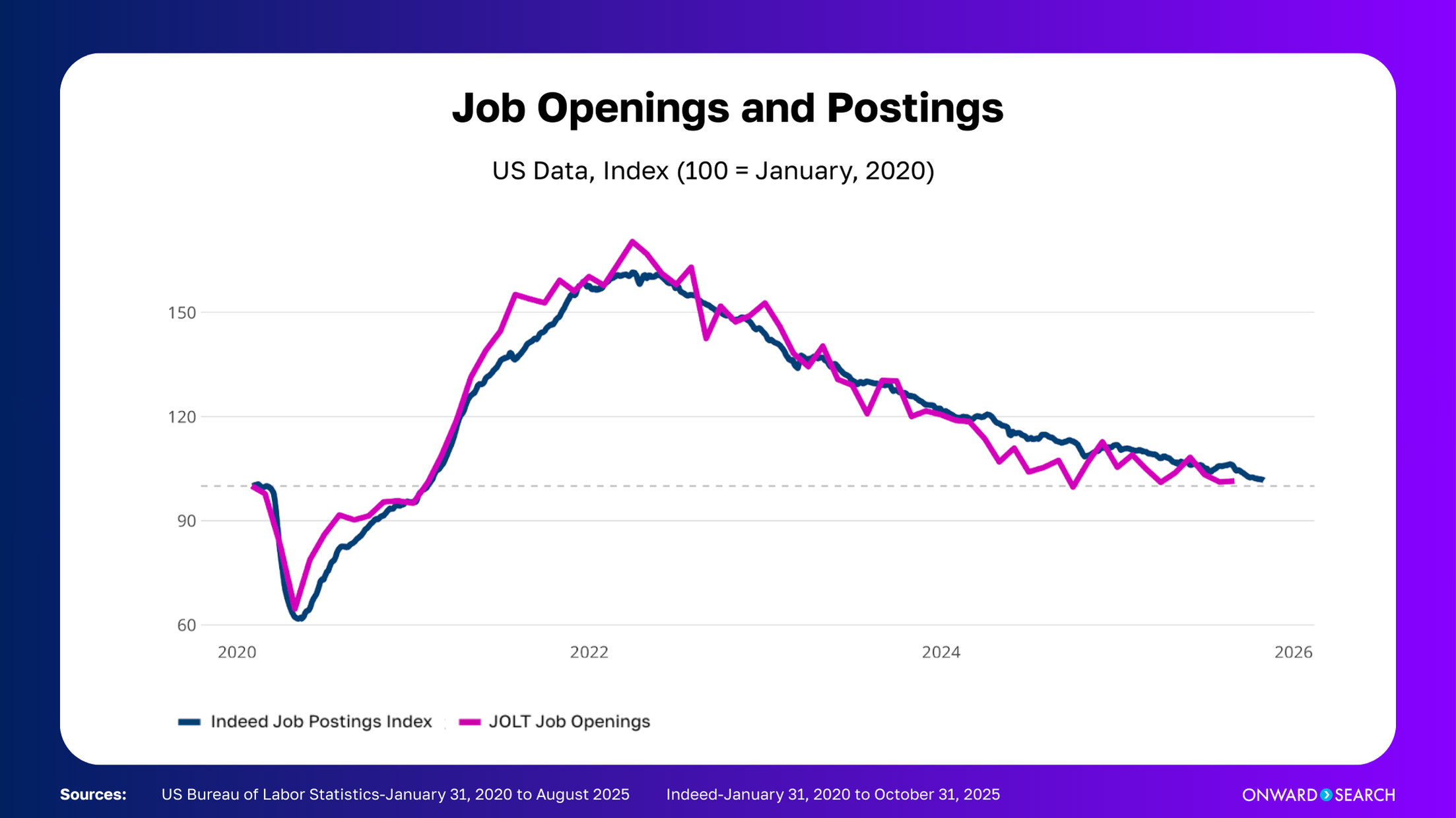
Hiring activity remains below recent highs, but companies are still hiring. In fact, our Hiring in an AI World survey found that 84% of marketing, creative, and technology leaders indicate they plan to hire this year. Tighter budgets have simply led organizations to move cautiously, focusing on roles tied directly to immediate growth, product development, and operational efficiency.
In addition, every hiring decision matters even more in today’s economic climate, and companies are taking increased measures to avoid the high cost of a bad hire. Across industries, recruitment processes have become more intensive, with companies leaning on internal and external hiring teams to look beyond resumes and vet candidates more thoroughly.
For marketing and creative teams in particular, expectations for each hire have increased. Leaders are looking for individuals who can help teams adopt new tools, elevate workflows, and contribute across disciplines. In 2026, hiring continues, but with greater precision and clearer intent.
84% of marketing, creative, and technology leaders plan to hire this year.
2) AI is driving more jobs than it displaces.
In 2026, no discipline is immune to AI’s disruption, and work that once took weeks now takes hours. This shift has influenced hiring across industries but not in the way that many fear. While AI-driven job displacement has begun, the tools have not displaced a large number of marketing, creative, and technology jobs at this time.
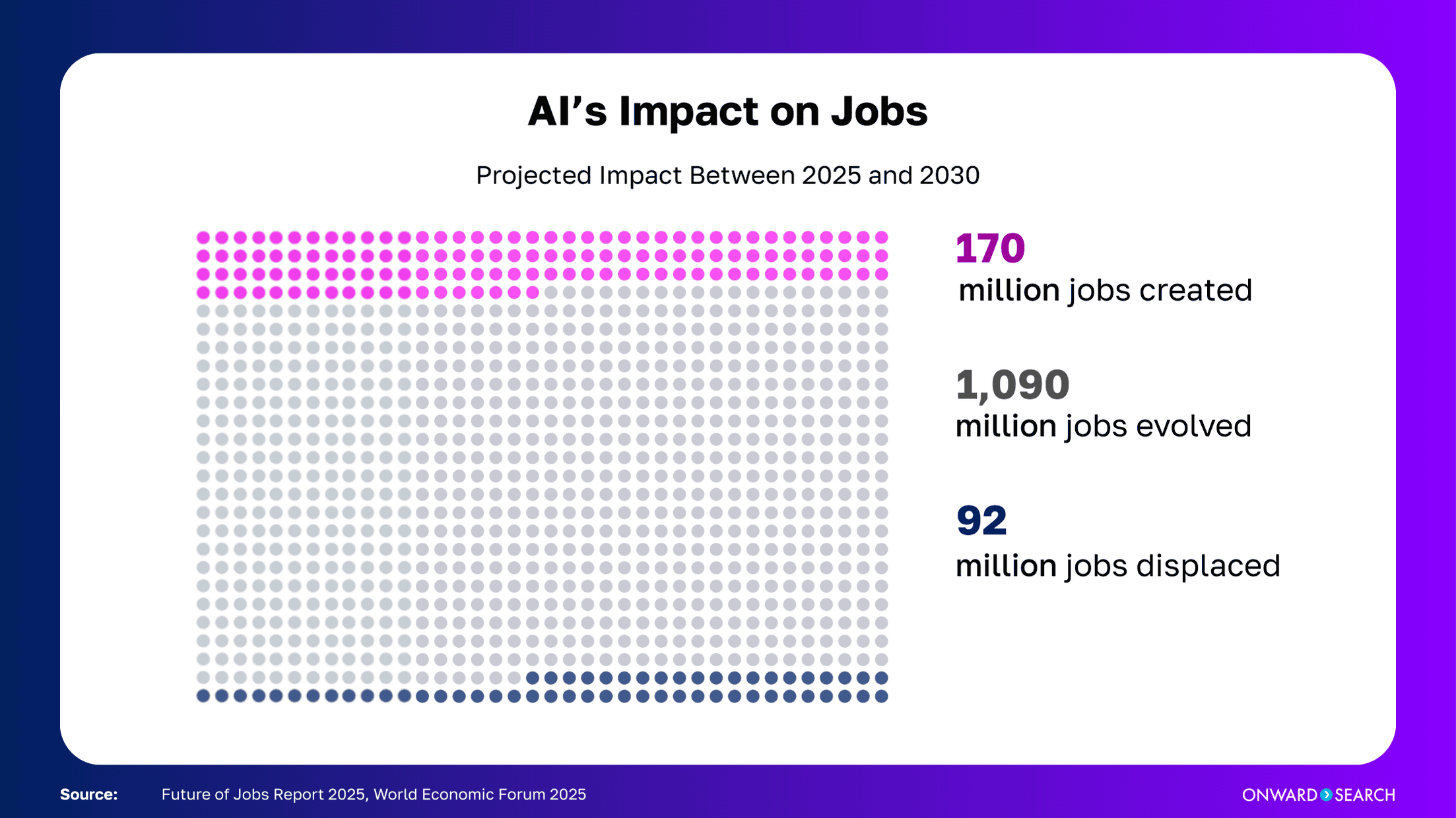
In fact, AI is predicted to create more jobs than it takes in the coming years. The World Economic Forum estimates 170 million jobs will be created globally over the next decade, compared to 92 million displaced. Recent LinkedIn data also shows AI has already contributed to 1.3 million new jobs since 2023, with many roles tied to software, product, marketing and creative production.
For these teams, the work has not disappeared; it has evolved. New tools have expanded what individuals can accomplish, while increasing demand for professionals who can apply, develop, and support the technology effectively.
AI has led to 1.3 million new jobs since 2023.
3) AI skills are difficult to assess & critical to attain.
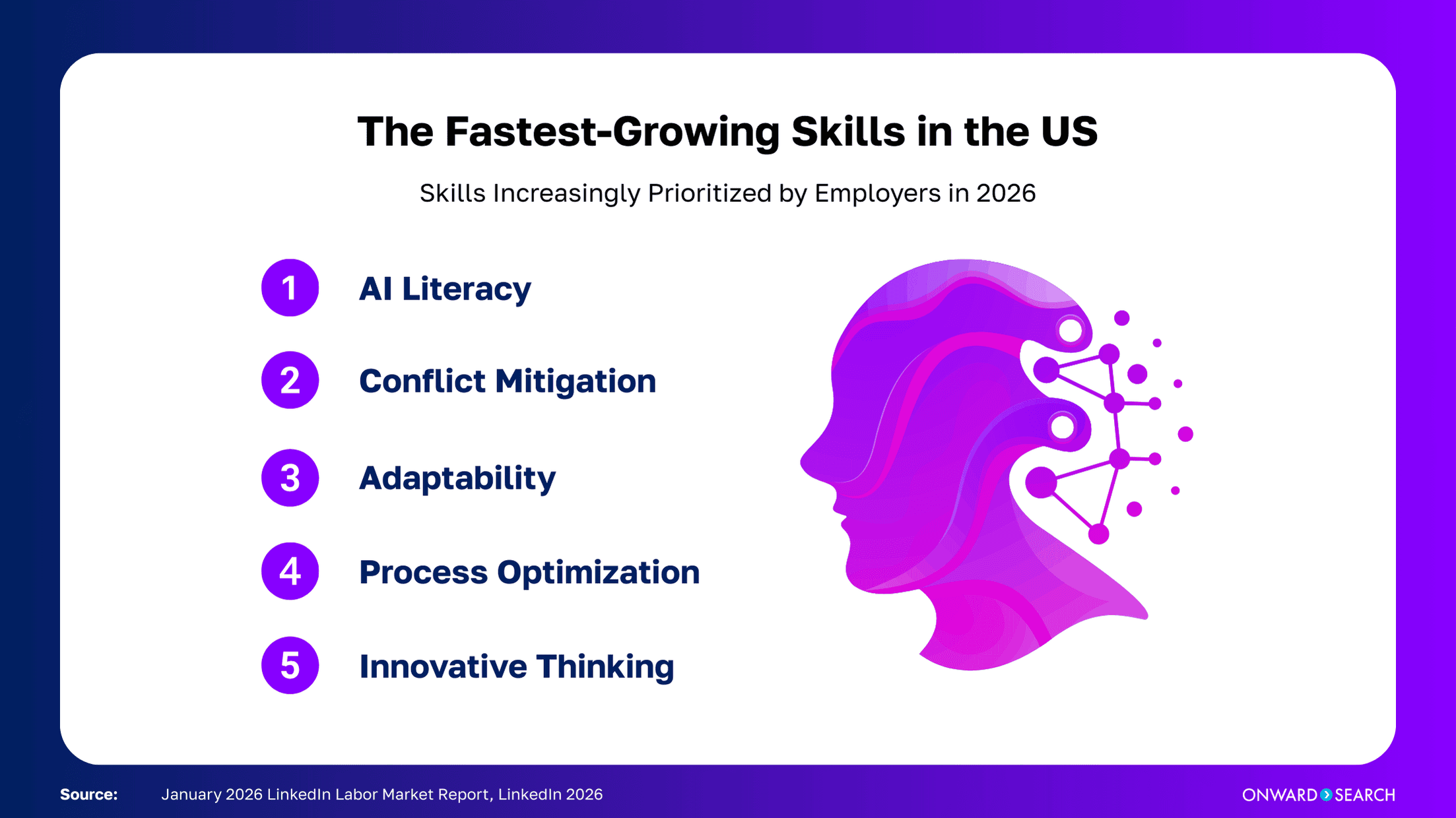
Employers widely agree that AI skills are now essential across most roles. LinkedIn identifies AI literacy as the fastest-growing workforce skill in the US, and job postings requiring AI skills have increased more than 70% year-over-year. In fact, 1 in 4 hiring managers say they wouldn’t hire a candidate without them.
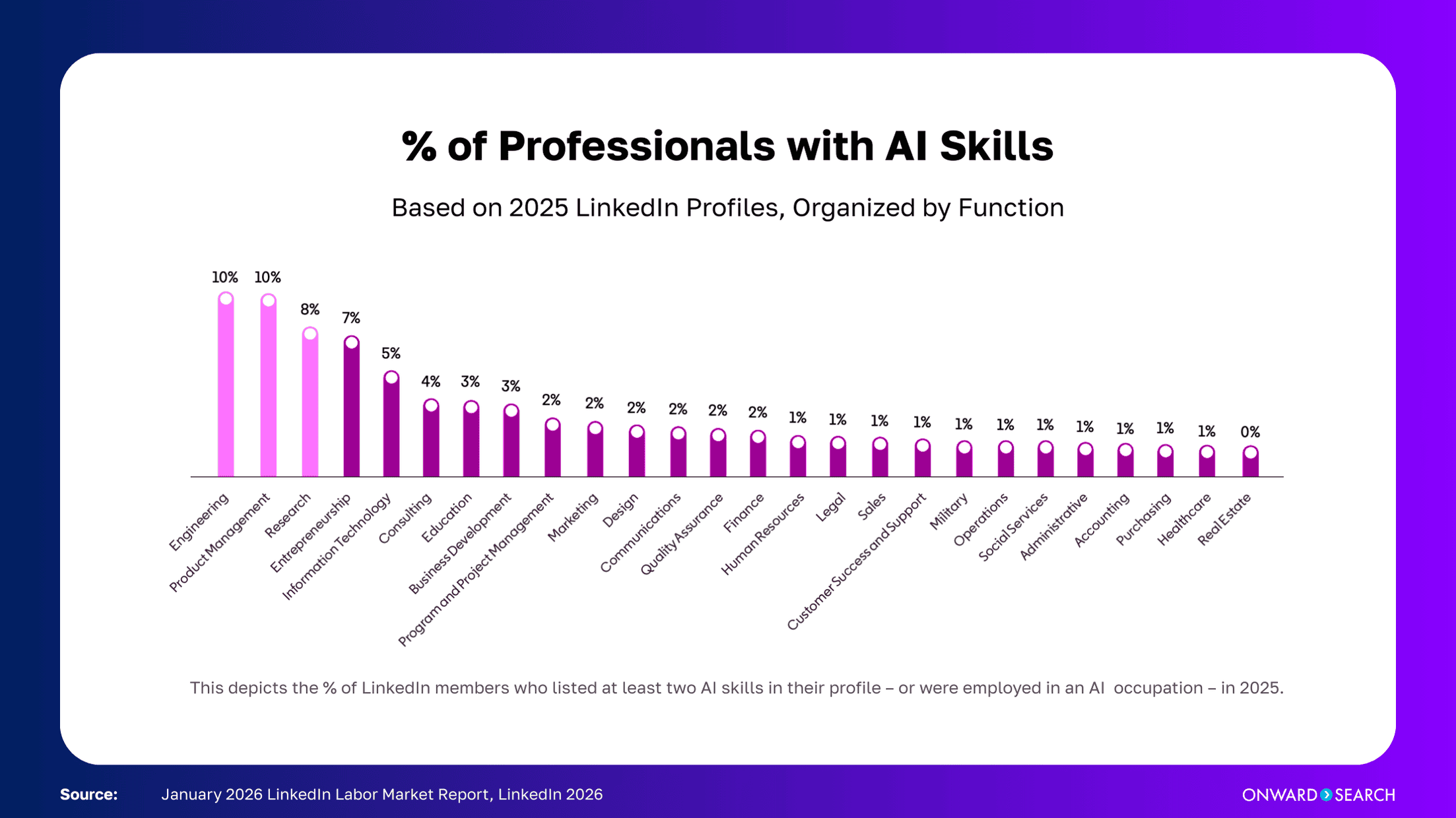
Yet only 3% of LinkedIn members currently list AI skills on their profile, and identifying candidates who can apply those skills effectively remains a challenge. Hiring managers often struggle to distinguish familiarity with AI tools from true expertise, with more than half admitting their confidence is not high in their ability to evaluate candidates’ AI skills.
This widening gap has increased the need for both AI skill development programs and specialized recruitment support. Marketing, creative, and technology teams require training to improve their AI fluency. But more than that, they require talent acquisition teams who can recognize the difference between those who list AI tools on their resume and those who’ve truly mastered them.
Only 3% of LinkedIn members have multiple AI skills listed on their profiles.
4) Traditional credentials are no longer essentials.
Degrees and job titles remain relevant, but they are no longer the factors employers most rely on. In 2026, 70% of companies report applying skills-based hiring practices, focusing on capabilities and work examples over formal credentials.
Interestingly, research from Microsoft and LinkedIn found 71% of leaders would rather hire a less experienced candidate with AI skills than a more experienced one without them. But it isn’t just AI skills that hiring managers seek. In addition to AI literacy, adaptability and process improvement are among the fastest-growing workforce skills of 2026. In an increasingly AI-powered world, critical thinking and problem-solving also take on a new level of importance.
Today’s marketing leaders focus more on what candidates can do than where they studied their craft. Creative directors prioritize portfolios and past work above all else. And engineering leaders want proof of hands-on implementation. Across functions, demonstrated capability has become one of the highest indicators of future performance.
71% of leaders would rather hire a less experienced candidate with AI skills than a more experienced one without them.
5) Today’s top talent specialize across functions.
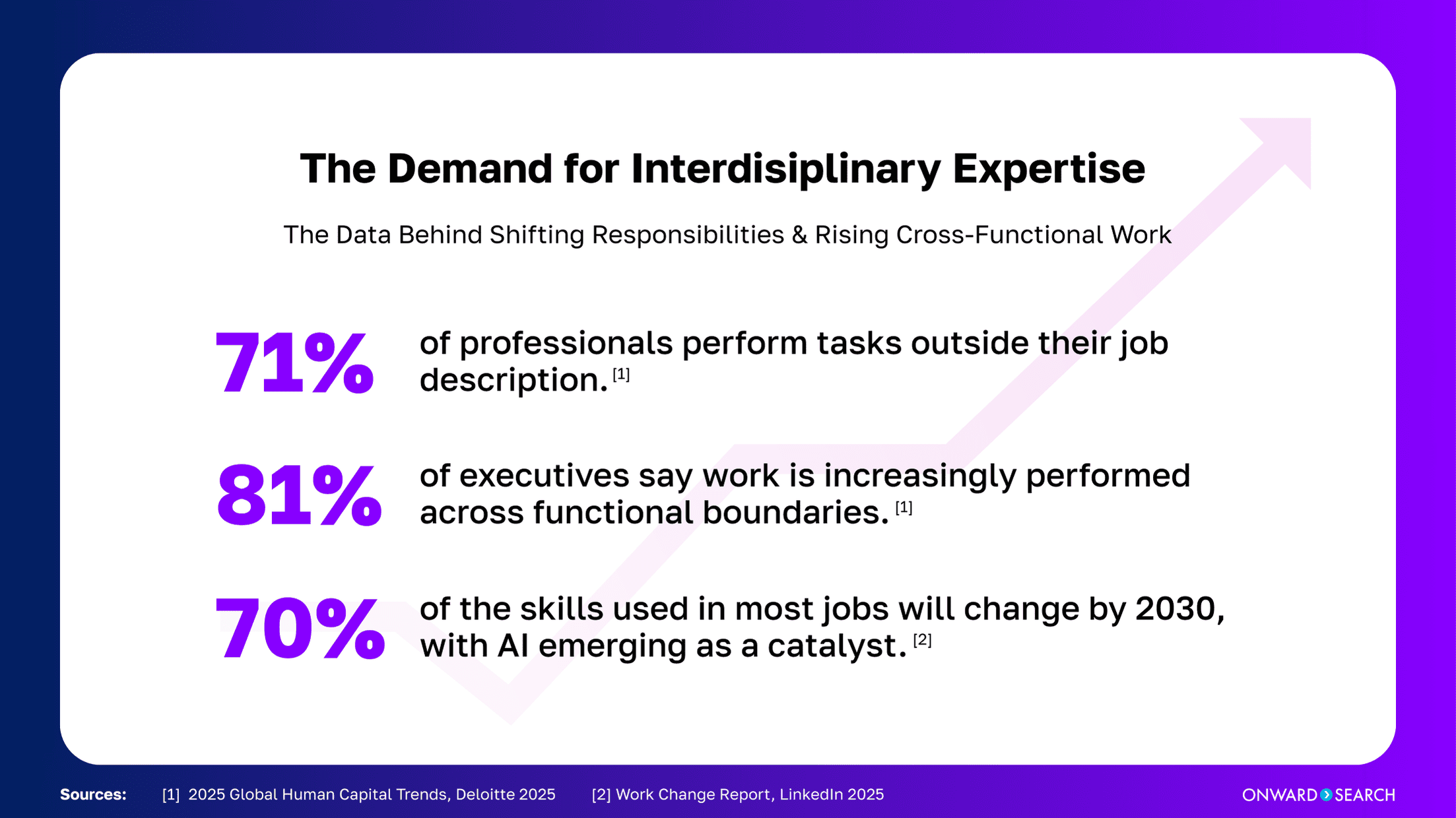
Marketing, creative, and technology roles are becoming more interconnected. Designers are expected to understand performance data. Marketers work directly within automation platforms and content systems. Developers collaborate closely with creative teams to shape digital experiences. As tools become more accessible, individuals are taking on responsibilities that once belonged to separate roles.
This shift is reflected in broader workforce trends. Professionals with the capacity for cross-functional collaboration are in high demand, as companies look for people who can operate across disciplines rather than within narrow specialties. At the same time, smaller teams and tighter hiring budgets have increased the need for individuals who can contribute in multiple ways.
As a result, employers are prioritizing professionals who combine creative thinking with technical fluency and strategic awareness. These hybrid skill sets allow teams to move faster, adopt new tools more easily, and reduce reliance on large, specialized departments. Across agencies, marketing organizations, and product teams, cross-functional talent is no longer the exception; it is becoming the standard.
Smaller teams and tighter hiring budgets have increased the need for individuals who can contribute in multiple ways.
6) For growing teams, fractional isn’t optional.
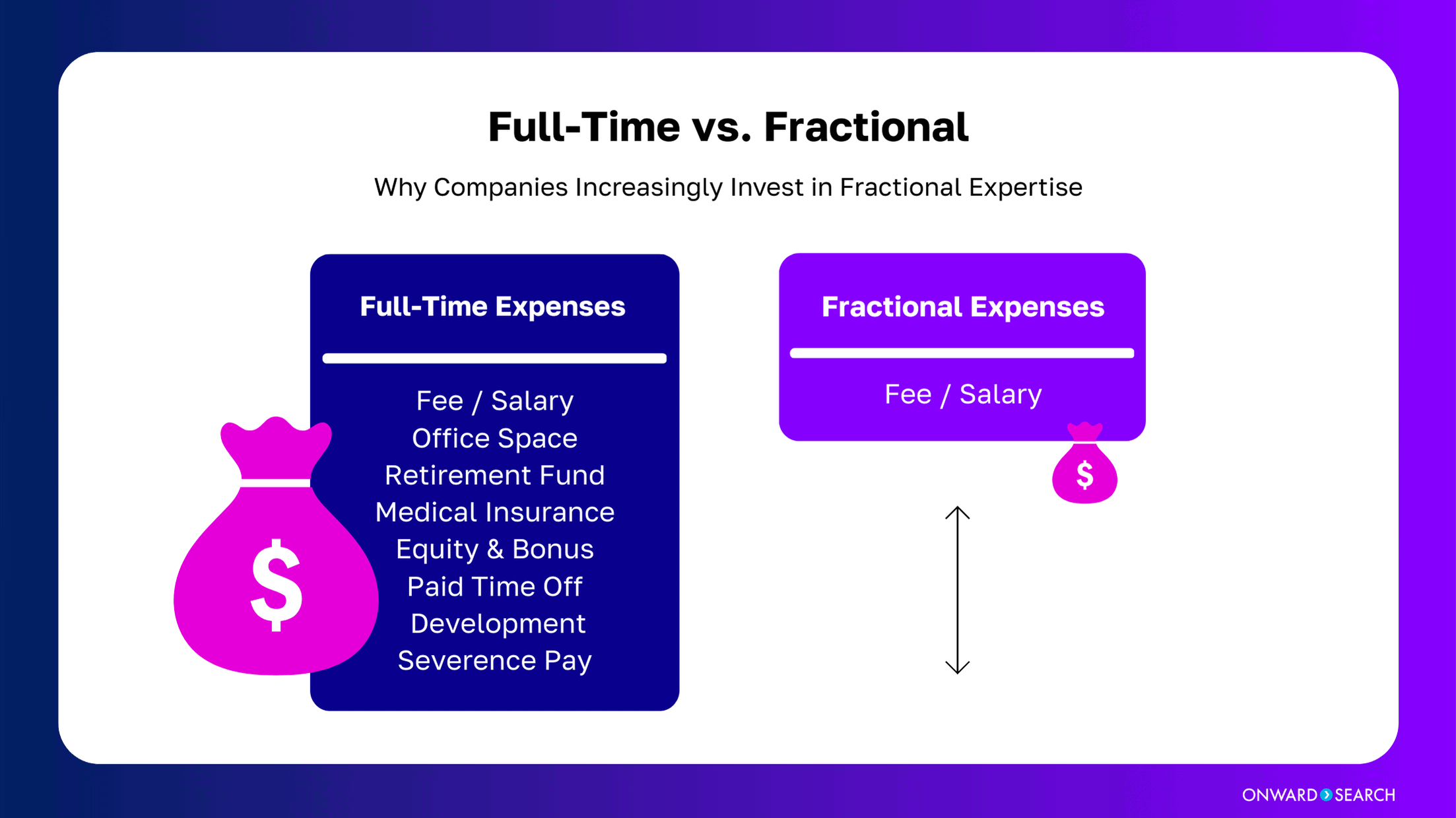
As business needs and budgets shift, organizations are leaning more heavily on part-time executives, specialized consultants, and contract experts to fill critical capability gaps. Fractional leaders have long been the first C-level hires in departments before they grow large enough to merit full-time ones. Today, this arrangement has expanded beyond a temporary solution.
Many organizations now treat fractional leadership as part of their workforce strategy, allowing them to access senior expertise while avoiding the overhead costs and long-term commitments of permanent hires. In 2026, companies are operating with leaner structures and greater financial caution, making it harder to justify full-time roles for highly specialized responsibilities.
At the same time, remote work and advances in digital collaboration tools have reduced the barriers that once made part-time leadership difficult to manage. Studies show the number of leaders taking on fractional roles has nearly doubled in recent years, and 77% of business leaders say AI adoption is increasing their reliance on specialized, fractional talent.
77% of business leaders say AI adoption is increasing their reliance on specialized, fractional talent.
7) Salary expectations are rising above hiring budgets.
New market conditions, combined with AI-amplified outputs, have increased pay expectations across marketing, creative, and technology roles. In response, many organizations are raising salaries and even offering signing bonuses to those with the skills and experience to deliver immediate impact.
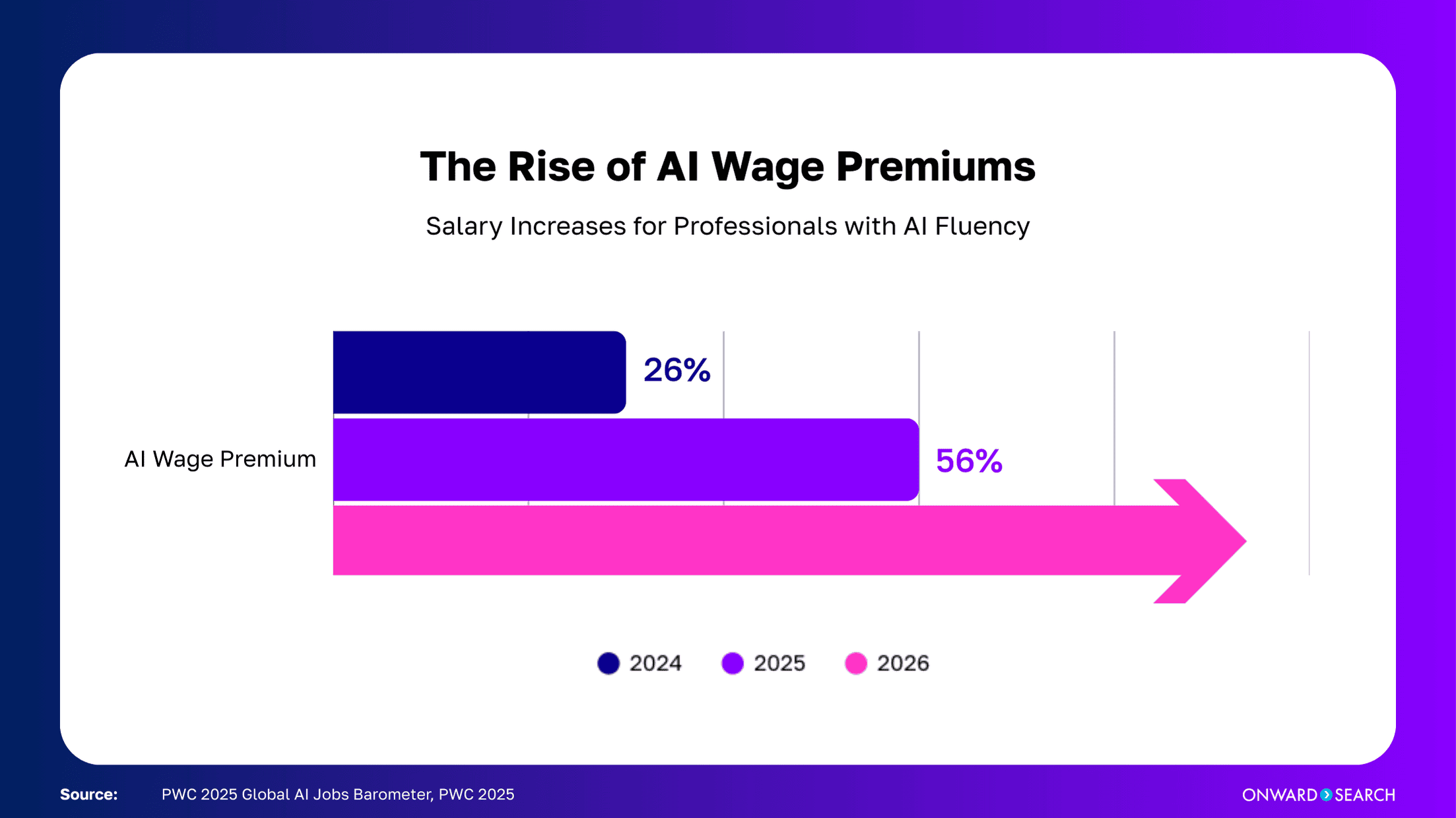
PwC reports that professionals with AI skills earn an average 56% wage premium. But major tech companies are poaching top AI talent with salaries that exceed those of professional athletes. CNBC reported salaries in the millions for select roles, such as AI researchers. This is not the standard, but it reflects the growing value of AI expertise.
At the same time, 92% of marketing, creative, and technology professionals say they would switch companies for higher pay in 2026, with over 70% targeting salary increases over 10%. Compensation remains one of the most important factors in attracting talent, but hiring decisions increasingly balance budget constraints with long-term skill needs.
Professionals with AI skills earn a 56% wage premium on average.
8) Skilled job seekers want more than money.
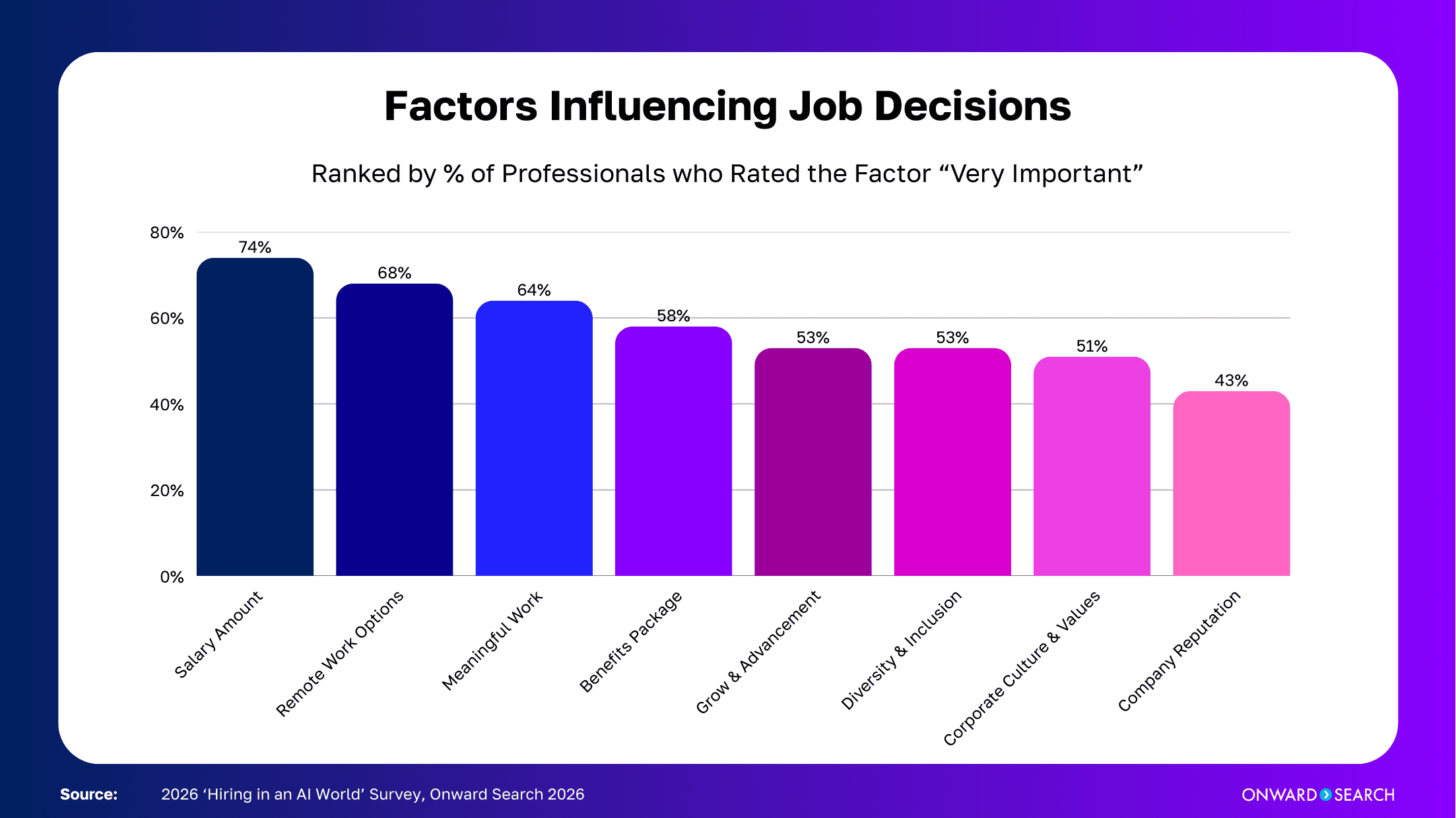
Nearly 74% of marketing, creative, and technology professionals say they’re considering switching companies in 2026, and compensation isn’t the only factor impacting where professionals choose to work. Many professionals say meaningful work is as important as remote work flexibility.
Our ‘Hiring in an AI World’ survey found that remote and hybrid work arrangements remain a high priority across fields, with many unwilling to consider fully in-person roles. Interestingly, the opportunity to contribute to meaningful work was rated as equally important by most respondents this year. In addition, more than 70% of professionals expressed interest in receiving AI training from employers, recognizing the need to upskill to remain competitive as roles and technologies evolve.
Competitive salaries may attract candidates, but long-term retention increasingly depends on flexible work environments, meaningful work, and opportunities for professional growth. As budgets tighten and automation increases, forward-thinking employers continue to invest in these critical areas to recruit and retain the best people available.
70% of marketing, creative, and technology professionals want AI training from their employers.
Final Thoughts
Hiring across marketing, creative, and technology teams has entered a more focused phase. Companies are still building teams, but they’re making fewer, more strategic hires. Across fields, proven skills now carry greater weight than credentials alone.
At the same time, fractional hiring is on the rise, salary expectations are climbing, and professionals are looking for opportunities to grow. As the economy continues to shift and AI advances at unprecedented speed, these trends are likely to deepen.
Much will continue to change. But the organizations that invest in their people will remain best positioned for success. And the leaders who understand how roles, skills, and expectations are evolving will be the ones to thrive in the years ahead.
 Hit your 2026 hiring goals.
At Onward Search, we provide innovative solutions and expert talent to help marketing, creative, and technology teams thrive in the future of work. Partner with us to hire skilled professionals, achieve your digital accessibility goals, and make AI transformation possible.
Request hiring support or a free consult.
Fill out the form to contact our team. We’ll respond within 24 hours to support you.
Your Search Ends Here
Whether you’re looking for your next hire or your next career, we’re here to help.